
New Facial Biometric Procedures
- G. Rhodes

- Mar 29
- 4 min read
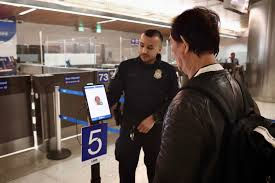
American citizens returning from international destinations are experiencing a faster, more streamlined Customs process at 15 US airports. My home airport of Raleigh-Durham International (RDU) will soon be among them, thanks to the launch of Enhanced Passenger Processing (EPP) technology, introduced in partnership with US Customs and Border Protection. The new EPP System uses biometric facial comparison to instantly confirm a traveler’s identity, allowing passengers to move through Immigration and proceed directly to Customs and baggage claim in record time.

The launch of Enhanced Passenger Processing demonstrates how advanced biometrics can transform passenger journeys,” said Andrew Bud, Founder and CEO, of iProov. “Powered by
iProov’s biometric technology, arriving US citizens can verify their identity securely in seconds, supporting travelers of all ages and mobility needs, while increasing throughput and enabling CBP officers to focus on what matters most: security and mission-critical border operations.” iProov uses "on-the-move" facial biometrics for identity verification, allowing travelers to pass through customs faster, sometimes without even having to present a passport

When a US citizen enters the inspection area, auto-capture cameras operated by CBP Officers take a quick photo. Within seconds, the system compares the live image to passport photos already stored in CBP’s database, verifies identity and citizenship, conducts law enforcement vetting, and creates a crossing record, all without requiring travelers to present their documents manually. The process is touchless and rapid, with CBP Officers available to guide and assist passengers as needed. Participation in EPP is voluntary and free. Travelers who prefer not to use facial comparison can simply notify an officer and complete the standard arrivals process.

Nationwide, CBP processed more than 419 million travelers at ports of entry in fiscal year 2025, with air arrivals increasing 4.5% year-over-year. To support this continued growth, CBP is implementing modernization enhancements across airports, seaports, and land borders to improve efficiency, enhance security, and prepare for rising travel volumes. Since launching EPP nationally, CBP has recorded a 25% reduction in wait times for American citizens. The program is now available at 16 U.S. airports, including those in Atlanta, Charlotte, Chicago (O’Hare), Dallas, Denver, Honolulu, Houston, Los Angeles, Miami, Minneapolis, Nashville, Orlando, New York (Kennedy), Philadelphia, Seattle and Tampa. According to a CBP Supervisor in Raleigh, it’s scheduled to be operational at RDU in a few short months.

With the new technology in place, many American airports continue to demonstrate their commitment to innovation and passenger convenience, making the journey home faster, safer and more seamless for US citizens. By automating identity verification, EPP enables CBP to better allocate resources, allowing officers to focus on higher-risk travelers, a cornerstone of the agency’s purpose. Their mission statement is to protect the American people, safeguard our borders, and enhance the nation's economic prosperity. As the country's premier border management agency, CBP enforces laws governing trade, travel and immigration while preventing terrorism and contraband from entering the US.

America is also taking a major step to modernize its borders with a full biometric entry-exit system. Under new guidance issued by the Department of Homeland Security (DHS), effective on December 26, US Customs and Border Protection is able to require the collection of biometrics, including photographs, of all non-US travelers entering and exiting the country. This rule propels a long-delayed biometric exit system that CBP now expects to be fully implemented at all commercial airports and seaports within three to five years. With this DHS action in America, the US is officially embracing game-changing facial comparison technology, which is quickly becoming the standard for secure, efficient travel around the world. Globally, other regions are already moving fast. The European Union (EU), for example, launched its Digital Entry/Exit System in October of last year, capturing facial images and fingerprints from all non-EU travelers. The system is being rolled out gradually across 29 European countries, with full implementation and mandatory use at all external borders expected by April 10, 2026.

CBP’s facial comparison technology significantly enhances security by verifying a traveler’s identity with near certainty with an over 98% accuracy rate compared to manual biographic checks. Biometric technology reduces traveler burdens and bottlenecks, helping travelers move through airports and seaports more efficiently without having to show passports and boarding passes. With full biometric exit in place for international air departures, visa overstay rates, rather than visa refusal rates, will become the key metric for Visa Waiver Program eligibility, unlocking the potential for new visa-free partner countries.
A fully implemented biometric entry-exit system will enhance national security, make travel smoother and catalyze the benefits of visa-free travel. With the 2026 FIFA World Cup and America 250 quickly approaching, the United States can’t afford to fall behind. Biometric technology is here.
Until next time…safe travels.



Hope the implementation goes better than that of the EU ... it has caused chaos and looooooong waiting times!
Thanks George for the update on making travel safer for all.