
Developing Modern Commercial Airliners

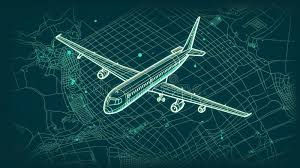
Developing a commercial airliner today is a lengthy and complex process requiring billions of dollars and years of hard work involving thousands of employees across a wide range of disciplines. The process includes extensive engineering, design, prototype manufacturing, and rigorous testing to meet stringent safety certifications from regulatory bodies like the US Federal Aviation Administration (FAA) and the European Aviation Safety Agency (EASA). The process begins with a conceptual blueprint and proceeds through a more detailed design, then prototype development and manufacturing and on to extensive flight testing and certification, all of which must occur before production can even begin. The entire lifecycle from initial concept to market launch often takes seven to ten years or more for airliners developed by both Boeing and Airbus.

There are three main design phases: conceptual, preliminary, and detailed. In the first phase, the conceptual sketch of the aircraft is laid out, including aerodynamics, propulsion, performance, structure and control systems. In the preliminary design phase, the conceptual design is optimized to fit into the necessary parameters set for the aircraft. Computational and wind-tunnel analysis of structural and control components is then performed. In the final detailed design phase, the fabrication aspects of the design are finalized. Flight simulations are then used to test the dynamics of flight. It is noteworthy that the official launch of the aircraft may occur sometime during the design phase.

Commercial aircraft manufacturers will next build an aeronautical prototype. Building and testing such prototypes helps identify and resolve design flaws early in the development process, which is critical for a system as complex and safety-critical as an aircraft. Prototypes allow engineers to ascertain how different components and systems work together in a physical form, going beyond what can be assessed with digital models alone. Aircraft manufacturers test prototypes under a wide range of challenging conditions, including extreme temperatures, to evaluate the airplane’s material properties, structural integrity, and overall performance. Prototyping provides a way to test and refine assembly and maintenance procedures, identify potential manufacturing challenges, and improve coordination with suppliers before full-scale production begins. These full-scale mockups are also used to showcase new aircraft concepts to potential customers and airlines, gather feedback on the cabin and features, and demonstrate compliance with safety standards for certification. By catching design issues early through prototyping, manufacturers can avoid the extremely costly and time-consuming changes that would be necessary in later production stages.

The commercial aircraft certification process follows. This multi-year, multi-stage procedure involves rigorous testing and documentation to ensure safety and airworthiness. It begins with the manufacturer submitting a certification program to a regulatory body like the FAA or EASA, which includes design evaluation, compliance demonstrations through flight and ground testing, and production approval. This rigorous process is required in the country of manufacture and any country where the aircraft will be operated. It culminates in three main certifications.
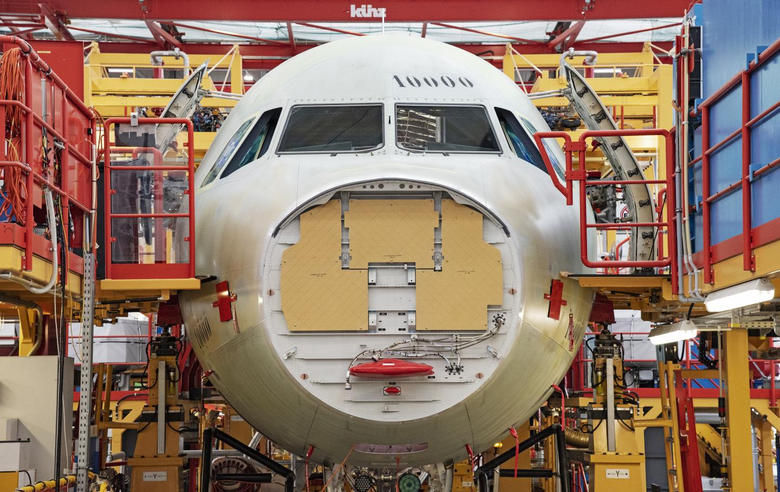
The first is a Type Certificate, which certifies the aircraft's design, including all engines and equipment. Extensive testing is performed to prove compliance, including ground and flight tests as well as structural and fatigue tests. The second is a Production Certificate for the manufacturing process to ensure that every aircraft built conforms to the approved type design. Here, the manufacturer must get approval for their production organization. The relevant regulatory body reviews the company's manufacturing facilities, processes, and quality control to ensure they can consistently and safely reproduce the aircraft design. Ultimately, a final inspection and test of the individual aircraft is conducted by a regulatory authority to verify it conforms to the type design and meets all airworthiness standards. If successful, an Airworthiness Certificate and Operating Limitations (which must be kept on board) are issued for each individual aircraft before it’s authorized to fly.

At this point, the manufacturer must prepare the commercial aircraft’s Entry into Service (EIS). This requires delivery tests and adequate training of airline personnel. The manufacturer also provides fleet support to the aircraft during its operational life with the customer. While fleet support contracts may significantly vary between customers, design changes to the airframe remain the manufacturer’s responsibility. The Entry into Service (EIS) Program is a comprehensive strategy designed to smoothly introduce a new aircraft type into an airline's fleet. It involves meticulous planning, coordination, and execution across various departments within the airline to ensure optimal operational efficiency and passenger satisfaction. The delay between arrival and entry into service varies from plane to plane and carrier to carrier. The intervening time is used to ensure that all crew members assigned to work the new aircraft are suitably trained on the type. This takes longer when the aircraft in question is the first example of a certain model to arrive at an airline. If it’s a widebody aircraft destined for international and transoceanic routes, initial flights tend to be shorter domestic runs to better familiarize crews. New examples of an existing type are likely to see a quicker entry into service.

The development cycle of commercial airliners involves huge costs for the manufacturers and takes a long time. In fact, it’s common for the certification process to take much longer than planned. The development of the Boeing 787 Dreamliner, due to its composite design, was estimated to be completed in five years at a cost of $5.5 billion. But, it took nine years for Boeing to get the aircraft to market with an expenditure of over $22 billion. The Airbus A350 was no exception when it came to developmental delays and increased costs. The aircraft was delayed by over two years and cost nearly $10 billion as opposed to the initial estimate of $5.3 billion.Similarly, the development costs associated with the Airbus A380 were estimated at $11.3 billion, but after nearly three years of delay, the superjumbo ended up costing Airbus a staggering $33.9 billion.
Developing commercial aircraft is complex process due to its massive costs, stringent safety and regulatory hurdles, intricate system integration (aerodynamics, electronics, structure), global supply chain vulnerabilities, and intense pressure for fuel efficiency and sustainability. The management of extreme technical precision for components with minimal safety margins must also be taken into account, leading to long development cycles and huge financial risks.
Until next time…safe travels.


Comments