
My Time in Jaipur


After a good night’s sleep at the Rambagh Palace Hotel upon arrival in Jaipur, I faced a few days of a professional conferences and any number of meetings. Doing business in India has often been described as a high-reward, high-complexity endeavor, frequently likened to a "surprising marathon" due to its mix of massive opportunities and unique logistical, regulatory, and cultural challenges. While the nation is a rapidly growing, trillion-dollar economy with a vast consumer market, navigating its operational vagaries requires patience, adaptability, and local expertise. India is not a monolithic market; it is highly diverse, with significant regional variations in consumer behavior, language, and regulations. Indian businesses and national professional associations tend to have a hierarchical structure where senior officers hold the decision-making power. As such, negotiations can sometimes be slow, requiring persistence and high-level engagement. Despite these many challenges, our time in Jaipur was successful and after several days of business, I was anxious to enjoy the city for a few days before heading home.

The very helpful hotel concierge put the City Palace at the top of the list of “must see” destinations in Jaipur, so I took her advice. Located in the heart of the city, the City Palace is a magnificent royal complex built between 1729 and 1732 by a long-ago maharaja. The tallest building, featuring seven stories, is the Chandra Mahal complex, I was surprised to learn that, unlike many museums, this complex within the palace remains the residence of the present-day royal family of Jaipur. The titular head of the family was and still is Maharaja Padmanabh Singh, a prominent polo player, who is a global ambassador for the US Polo Association and a philanthropist who has managed the estate since the age of 12. The palace features exquisite design and is made of pink and red sandstone. Located within the palace itself is the Maharaja Museum, which houses an extensive collection of unique artifacts such as royal costumes, textiles, and authentic weapons. The City Palace is one of the few royal court complexes from a bygone era that’s survived intact as a single site, serving as a hub for art, history, and royal tradition. I thoroughly enjoyed my visit.

The Amber Fort (or Amber Palace) was next on my list. Situated high on a rocky hill for defense, construction was started in 1592 by Raja Man Singh the First. It served as the capital of the local dynasty for centuries, even before Jaipur was built some six hundred years later. I was fortunate that my tour got to experience the Sheesh Mahal (or Hall of Mirrors) that was designed specifically for the queen to enjoy. This Hall of Mirrors was a remarkable room covered in intricate, tiny mirror mosaics that were lit up by a single candle to look like a starry night. It was an incredible sight to behold. Built with pale yellow sandstone, this UNESCO World Heritage Site is known for its outstanding architecture, sprawling courtyards and scenic views over Maota Lake, The fort was organized into four main sections, each with its own courtyard, including the king’s quarters and the separate women's quarters. There are also underground tunnels used for safe passage of the royals from the Amber Palace to the nearby Jaigarh Fort.

Jaipur has many famous markets and bazaars, each specializing in different goods. One of the oldest (at nearly 300 years), is the Chandpole Bazaar known for handicrafts, marble sculptures, turbans, and carpets. Compared to the shopping malls we’re used to, this bazaar was loud and chaotic, yet fascinating at the same time. It was a bustling and crowded area where everybody bargains. I was informed to initially offer about a third of the asking price and take it from there. Although I was approaching sensory overload, I was hooked and even took time to explore a number of narrow lanes hiding unique and hand-made souvenirs. The Johari Bazaar was also recommended and fit right into the look of the city as it was characterized by pink-painted buildings. Here I encountered more teeming narrow lanes and countless shops specializing in traditional jewelry. In fact, the word “Johari” translates to jewelry and, feeling like a “pro” after bargaining, I ended up receiving anywhere from 25 to 35% off the initial quoted price. While both markets were certainly hectic, the experience left me with an appreciation for the city’s artisan traditions.
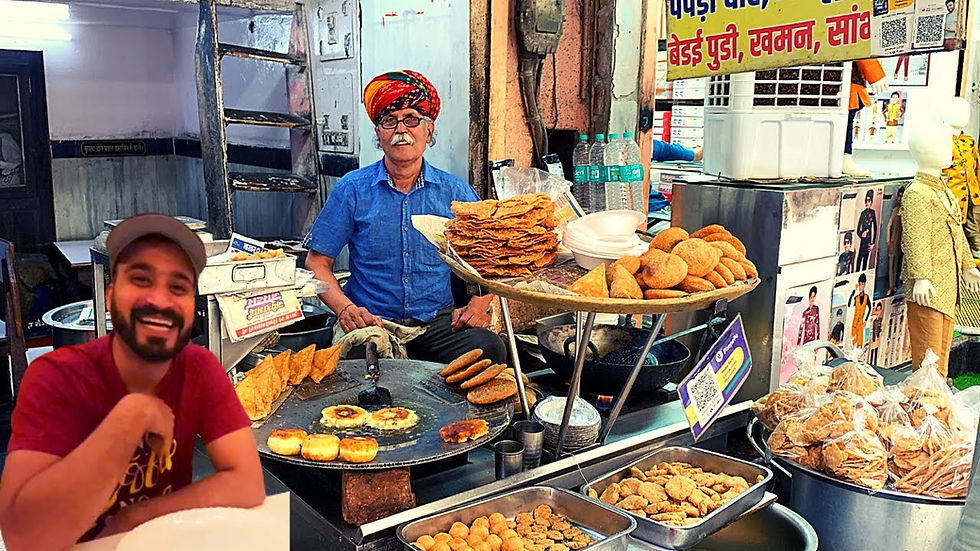
Since I was out and about in the markets, I wanted to try just a little of the street food, but I knew that Indian street food carried a high risk of causing “Delhi Bely” for western stomachs due to the differences in gut bacteria, water quality and hygiene standards. I was prepared and played it safe by sticking to food items which were fried or roasted before my eyes and avoided salads as well as fruits and beverages, which were likely rinsed or contained tap water. I also chose just a few popular, busy vendors where the turnover was high, ensuring the food hadn’t been sitting out for long. Having said all that, I tried a few Vegetable Samosas, the popular, deep-fried pastry dough filled with potatoes, onions and peas as well as several Parathas, flaky-buttery unleavened flatbreads which were fried before me on a hot griddle. I didn’t push my luck with anything else and happily minimized my risk by also being picky about the vendors from whom I ordered.

Having had my fill of palaces and markets, I anxiously spent the next early morning at the Jhalana Amagarth Jeep Safari. Both reserves are celebrated for their exceptionally high leopard density and we were able to spot several (no pun intended) of these elusive predators during our drive. Beyond leopards, the park is home to striped hyenas, desert foxes, and spotted deer as well as over 150 different species of birds. The reserve is also home to Shikaar Audi, a striking three-story hunting lodge built by the former Royal Family of Jaipur, which now serves as a wildlife-spotting platform. Our safari tour was conducted in an open-top Jeep 4x4, which allowed for excellent visibility and off-road navigation. We were accompanied by Arjun, a government-licensed naturalist who really excelled in tracking wildlife movements. We drove through rocky trails, dry forests, and scenic viewpoints, which provided plenty of adventurous off-roading. And, unlike other massive national parks, these reserves limited the number of vehicles allowed inside at one time. Because the park practically sat in the heart of Jaipur, we didn’t have to travel far from the city center to immerse ourselves in nature. This was a really fun and thrilling experience made even more special by Arjun, out knowledgeable and friendly guide.

Before heading home later in the evening, we took some time to visit Chokhi Dhani, a popular village-themed cultural park located some 12 miles outside the city center. Upon arrival and amidst the sound of beating drums, we all received a traditional welcome with a tilak (forehead mark symbolizing piety, focus and divine connection). The 10-acre property featured a variety of immersive attractions, including cultural performances highlighted by live folk music, dances, puppet shows and magic acts. Those interested were invited to receive free henna applications or participate in pottery making, palmistry and/or astrology readings. For the more adventurous, Choke Dhani offered camel, elephant and horse rides. A handcraft market was also on site with vendors selling traditional clothing, jewelry, and block-printed souvenirs.
I found Jaipur to exhibit a generally more manageable and calmer pace of life compared with other Indian cities and its blend of royal history and vibrant culture.
Until next time…safe travels.


Comments