
Prague: The City of a Hundred Spires
- G. Rhodes

- Dec 27, 2025
- 5 min read
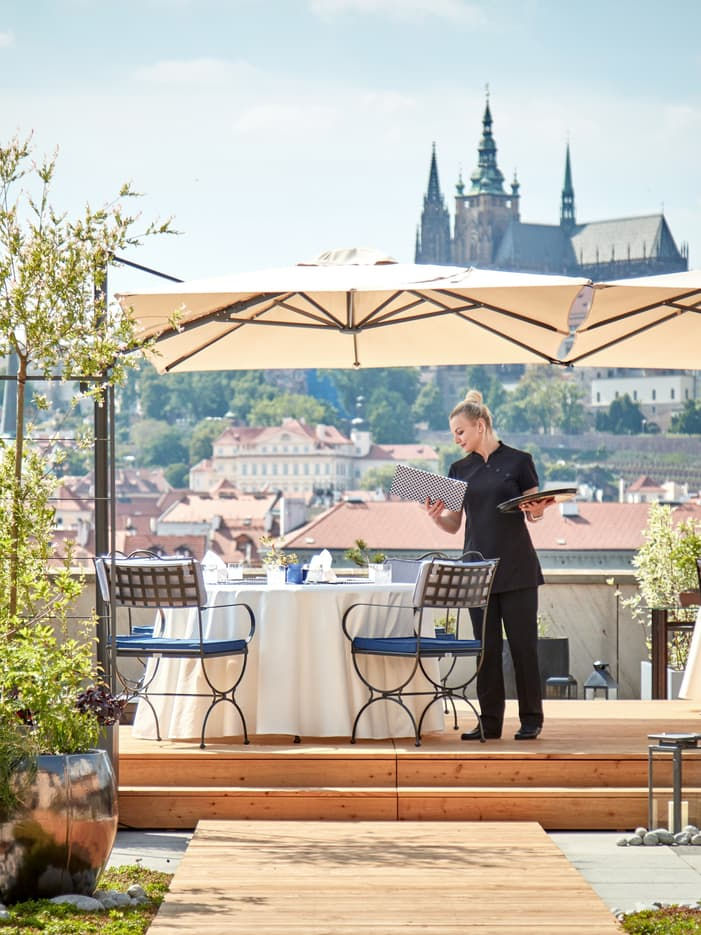
My conference at the Four Seasons Hotel Prague drew participants from many nations and a variety of oral health disciplines. That property was a wonderful place to call home during the days of my visit and I must compliment the hotel and its staff for ensuring that all the needs of our international attendees were met. The hotel provided dedicated function rooms that were adapted for our events, with some even featuring terrace access. There was a main ballroom, which could be configured for different setups, and the hotel's banquet capacity was based on tables of eight in a round arrangement within this space. The Four Seasons also offered various video conferencing services which came in handy for those delegates who were unable to make the trip to the Czech Republic. As one of the conference organizers, I very much appreciated the high quality of the catering services and the concierge assistance made available to our group, ensuring all our events ran smoothly.

Several afternoons were open which gave the delegates an opportunity to explore "The City of a Hundred Spires." The nickname was given because of the vast number of architectural towers, turrets and steeples which have dominated its skyline for centuries. The Four Seasons is located on the Vltava River, a short walk from the Charles Bridge and so I took a walk at my first opportunity. Construction on this stone bridge began in 1357 under King Charles IV and was completed in the early Fifteenth Century, replacing the previous one destroyed by a flood. The pedestrian-only bridge is nearly 1,700 feet long and over 32 feet wide, supported by 16 arches. It’s lined with 30 statues and a crucifix, mostly made of sandstone and added between the Seventeenth and Nineteenth Centuries. Many statues are modern replicas, with the originals since moved to the National Museum to protect them from the elements and the large number of visitors. A famous Prague landmark renowned for its architecture, the Charles Bridge offers excellent views of the city and is especially picturesque at sunrise and sunset.

Just a 20-minute walk across the bridge took me to Prague Castle, another must-see attraction. The largest ancient castle complex in Europe, with over 700 rooms, the castle has been the seat of Bohemian kings, Holy Roman Emperors, and Czechoslovakian presidents, making it a vital center of Czech history. It's a complex of palaces, churches, and gardens that reflect various historical periods, from the Tenth Century to the present day. It was a treat to see its significant historical artifacts, including the Bohemian Crown Jewels as well as relics of bygone kings, and other art treasures. A highlight for me was the stunning St. Vitus Cathedral, a monumental Gothic cathedral with stunning spires and the final resting place for many Czech royals and the historic Old Royal Palace, which featured a mix of Gothic and Renaissance architecture. The picturesque Golden Lane, also within the castle complex, is a charming street of small, colorful structures that once housed castle guards and are now filled with numerous historical displays.

Czech cuisine is known for its hearty, comforting, and rich meat-and-potato dishes with heavy gravies and dumplings. Several of us were looking forward to sampling the national dishes and we secured a dinner reservation at Lokál Dlouhááá in Old Town, which proved a good choice for authentic Czech food served in a rather hip vibe. The interior boasts an industrial design, creating a vibrant and casual atmosphere. Our group sampled several of the classic dishes such as Beef Goulash, Chicken Schnitzel, and Fried Edam Cheese, all prepared with fresh, locally-sourced ingredients. Everything was delicious. The establishment is renowned for its freshly tapped Pilsner Urquell Beer served directly from the tank. Known as tank beer in Prague, this fresh, unpasteurized beer is delivered directly from the brewery to pubs in temperature-controlled, sealed tanks, which preserves the flavor until it’s poured. The service was fast and efficient, but also very friendly and all of us enjoyed our evening.

Another distinct advantage of staying at the Four Seasons was its close proximity to Old Town (Staré Město), which we visited on one of our free afternoons. Prague's Old Town is the historic heart of the city, known for its medieval charm, stunning architecture spanning various styles, and numerous iconic landmarks. It's part of the historical city center protected by UNESCO. The Old Town is actually a dense network of picturesque, narrow streets and alleyways, with most major sights centered around Old Town Square.This has been focal point and a central marketplace since the Twelfth Century and the bustling square is surrounded by a mix of architectural styles, including Gothic, Baroque, and Rococo. We had an opportunity to see the famous Prague Astronomical Clock located on the southern side of the Old Town Hall tower. Known as Orloj, the clock’s an ancient and complex mechanical clock which displays astronomical information, including the positions of the Sun, Moon, and stars, along with the time. Originally installed in 1410, it’s the oldest operating astronomical clock in the world and is known for its hourly show featuring the procession of the Apostles and four allegorical figures.

We next visited the National Museum, a major institution founded in 1818, dedicated to the history, nature, and culture of the Czech Republic. It houses over 20 million items across numerous departments, including natural history, archaeology, history, and a significant collection of music-related materials. The main building is an architectural marvel with a beautiful rooftop terrace offering 360-degree city views. This impressive Neo Renaissance structure located on Wenceslas Square contains collections covering Czech prehistory, classical archaeology. I particularly liked the permanent exhibit titled "History of the 20th Century," which showcased numerous artifacts reflecting recent Czech history. Notable items include the first Czechoslovak Olympic Gold Medal from 1924, uniforms and tanks, as well as the pen used to sign the 1945 surrender of German troops in Prague. That exhibit also included an authentic recreation of a 1920s kitchen highlighting its “modern" design.

On the final afternoon before my flight home, several delegates joined me on a leisurely Vltava river cruise. Prague Boats offered any number of cruises, including luncheon or dinner cruises or the one-hour sightseeing cruise we chose. It was such a fun and relaxing way to appreciate the beauty of this captivating city. It proved to be a unique and relaxing way to see the iconic landmarks like the Charles Bridge and Prague Castle from a different perspective while avoiding the crowds and all the street traffic.
I’d jump at the chance to return to Prague. It’s a special place with a real mix of medieval history, beautiful architecture and much-appreciated cuisine.
Until next time…safe travels.


Comments