
A History of Commercial Flight
- G. Rhodes

- Aug 16, 2025
- 5 min read

Flying has become the transport of choice for both business and leisure travelers across the globe and is now considered to be the fastest, most convenient and safest form of long-distance travel. But, how did commercial flight go from being initially for the adventurous to the exclusive realm of the rich and finally to the mainstream and affordable option it Is today? We can discover the answer by taking a look at how air travel evolved through the decades and how it’s shaped our modern-day lives. The first passenger flight took off in May 1908 when Wilbur Wright carried Charles Furnas, a friend and Wright Brothers mechanic, just 2,000 feet across the beach at Kitty Hawk, North Carolina. One year later, the first airline in the world, the German airship company DELAG, was founded. In 1914, the world’s first scheduled passenger service, an airboat piloted by Tony Jannus, set off from St. Petersburg, Florida, and landed at Tampa some 17 miles away. The service only ran for four months, but it had unlocked the appetite of those keen to tap into the novelty of air transport.

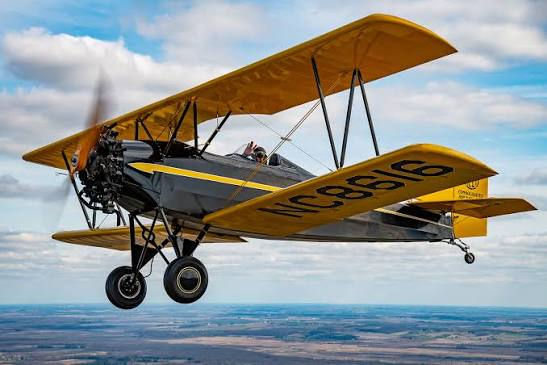
However, it wasn’t until the 1920s that commercial flights carrying paying passengers started to become commonplace with the introduction of the multi-engine airplane, the Lawson C-2, which was specifically built to carry passengers. During this time, more and more start-up airline carriers were being established, some of which are still in operation today. These include KLM in the Netherlands (1919), Colombia’s Avianca (1919), Qantas in Australia (1920), and Czech Airlines (1923). Aircraft from this period would land frequently to refuel and fly at lower altitudes due to unpressurized cabins. This made traveling by plane noisy, cold, and expensive. Flying times were lengthy, and turbulence was frequent. Passengers regularly experienced air sickness, and many airlines hired nurses to reduce anxiety and tend to those affected.

In 1935, Qantas operated its first international passenger flight, traveling from Brisbane to Singapore. From there, British-owned Imperial Airways connected this flight to the UK. This was to set the wheels in motion for creating a regular travel route between Australia and the UK in the coming decades. Despite flying being incredibly dangerous and extremely expensive during this period, it was still a fashionable way to travel for the rich. According to the Smithsonian National Air and Space Museum, the number of airline passengers grew from just 6,000 in 1930 to nearly half a million by 1934. The aviation industry was well on its way to becoming hugely important to the global economy. The introduction of the Douglas DC-3 in 1935 also had a big impact on the future of commercial flight. The propeller-driven airliner was a larger and much improved aircraft compared to its predecessors. Faster and more reliable, it could carry up to 32 passengers and had a cruising speed of 207 mph with a range of 1500 miles. This made it popular with well-established airlines, including Delta, TWA, American, and United, all of which soon added the aircraft to their fleets.

During the 1940s, the onset of WWII meant commercial aviation developments slowed considerably. However, by the end of the decade, the industry was heading towards a new era as Pan American World Airways began operating its fleet of Boeing 307 Stratoliners, which featured the first-ever pressurized cabin. This transformed air travel for passengers, allowing them to enjoy a comfortable experience at an altitude of 20,000 feet. Major airlines were now ramping up their advertising spending and offering travelers smooth journeys to far-flung destinations and business hubs, including Pan Am’s iconic New York to London route. The 1950s and 1960s heralded the age of jet engine aircraft, and with it came an upsurge in commercial flights, airline carriers, and international flying routes.

Commercial air travel was booming, and major airlines were fiercely competitive, offering passengers more and more inflight perks, including lavish silver-service meals and fine wines. Pan Am was a front-runner in pioneering and marketing the very best air travel had to offer. It was the first airline to fly worldwide and introduced ground-breaking changes to the industry, such as adding jet aircraft to their fleet and utilizing computerized reservation systems. The airline was also the first to fly the new Boeing 747 Jumbo Jet. In the 1960s, work also began on creating the world’s first supersonic aircraft and what would eventually become an iconic symbol of commercial flight, the Concorde. Offering New York to London transatlantic flights in just 3.5 hours, the aircraft was a hit with business travelers and royalty alike. However, tickets were extremely expensive and only a privileged few could afford to travel via supersonic airplane.

Larger and more economical aircraft, such as the Boeing 747, had also made cheaper air travel possible. Airlines were now able to carry more passengers than ever before, meaning ticket prices could be sold at a reduced rate. Taking a vacation overseas was no longer reserved only for the rich. This change in dynamics meant airlines started to look for different ways to retain the luxurious service and long lunches that had been synonymous with the golden age of travel, without compromising on providing a budget alternative. First-class cabins, sophisticated onboard bars, and exclusive-use airport lounges meant those who could afford to, could still travel in style.

But, the tragic events of September 11, 2001 had a profound effect on air travel. Security at airports was increased significantly and cockpit security was also heightened. According to the US Bureau of Transportation Statistics, it took until 2004 for air passenger numbers to reach pre-9/11 levels and until 2007 to reach record highs. Passenger numbers continued to surge throughout the 2010s, and by the end of the decade, the volume of travelers using commercial airlines was at an all-time high. The COVID-19 pandemic of 2020 nearly halted all global travel. But, in the ensuing years the global industry has demonstrated resilience and has mostly recovered to pre-pandemic levels. While certain regions and segments (like business travel in some areas) may still be catching up, the overall outlook for travel remains positive.
The only constant is change, but since the dawn of commercial flight the evolving industry has prevailed regardless of the obstacles it faced.
Until next time…safe travels.


This was a useful read for anyone who wants to stay informed about vehicle maintenance. Exploring automotive brake repair services in Baltimore, MD can provide helpful knowledge about keeping a vehicle's braking system performing reliably.
A successful remodeling project can make a home more comfortable while increasing its overall value. Thanks for sharing these useful ideas. I also found this guide on home remodeling with practical information.
It's refreshing to find a website that helps buyers discover quality second-hand products without the confusion that often comes with online shopping. The tips and recommendations are practical and useful. I would confidently recommend Used Items for Sale to anyone searching for affordable products with reliable buying advice.
This guide on Commercial Plumbing Bloomington is informative and easy to follow. Reliable plumbing is essential for every business, and having access to dependable local recommendations can save both time and money. Thanks for sharing such valuable community-focused information.