
Doolittle's Daring Raid

Updated: Apr 26

After the December 7, 1941 surprise Japanese attack on the US Naval Fleet stationed at Pearl Harbor, Hawaii, things went from bad to worse. In the early months of 1942, gloom was descending over America like a bad winter storm. On all fronts, the US and its allies were reeling from the blows of the Axis Powers. By the beginning of that year, Nazi Germany had conquered or occupied a staggering portion of Europe, including Poland, Denmark, Norway, Belgium, the Netherlands, Luxembourg, France, Yugoslavia and Greece. In the Atlantic, German U-boats were sinking American ships within sight of the US coastline. Britain was being strangled, and the German Wehrmacht was in the suburbs of Moscow. In the Pacific, Japan not only occupied Korea and China, but had also taken Malaya, Singapore, Java, Guam and Wake Island while threatening the Allies' lifeline to Australia.The Axis powers looked to be invincible. In the midst of those dark days burst the light of the Doolittle Raid on Japan.
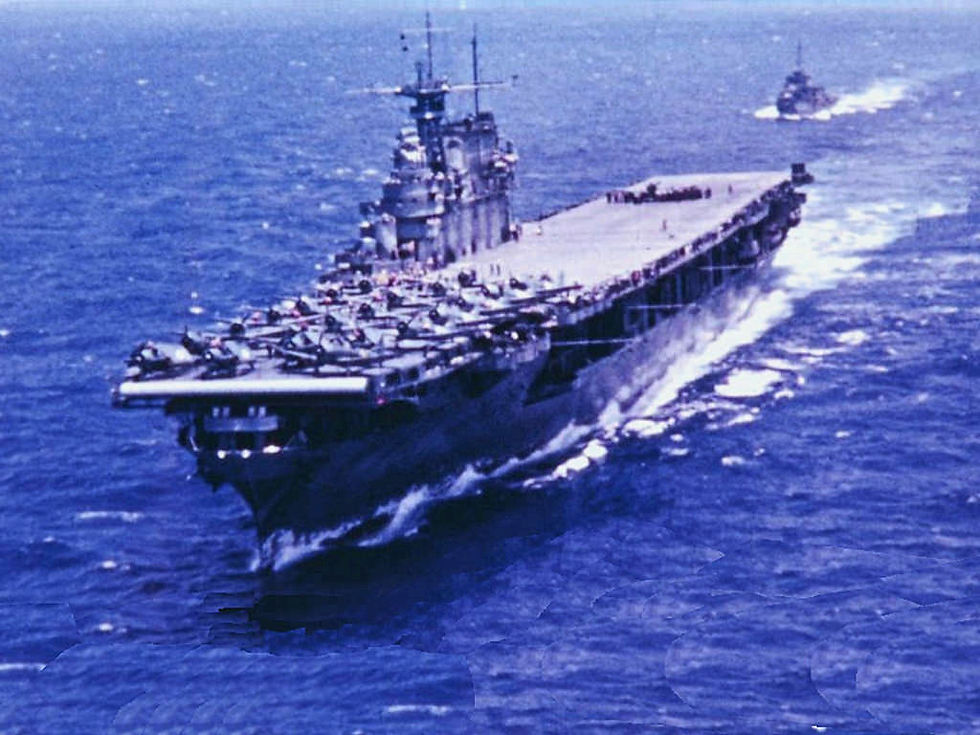
The US Navy conceived the raid as a way to raise morale. It entailed launching Army twin-engine bombers from the deck of the USS Hornet aircraft carrier to bomb selected cities in Japan. It was a way to strike back. It was a way to demonstrate that no matter how bleak the future looked, the United States wouldn’t give up. Leading the attack was Army Lieutenant Colonel James H. Doolittle, the aviation pioneer and daredevil racer who pioneered instrument flying. (See my post of April 11 titled Jimmy Doolittle and the Birth of Instrument Flight.)

Twenty-four planes were initially drawn from the US Army Air Force's 17th Bombardment Group and prepared for the mission. Additional fuel tanks were installed and “certain unnecessary equipment” removed. Intensive training began in early March 1942 with crews who had volunteered for a mission that would be extremely hazardous, would require a high degree of skill and would be of great value to the defense effort. Crews practiced intensive cross-country flying, night flying, and navigation, as well as low altitude approaches to bombing targets, rapid bombing and evasive action. Doolittle eventually led 80 volunteer airmen (comprising 16 five-man crews) and trained his pilots to ensure their B-25B Mitchell bombers were airborne after only 450 feet on the runway instead of the usual 1,200. Following these intensive preparations, the aircraft were loaded onto the USS Hornet at the Alameda Naval Air Station near San Francisco, California. The loading occurred on April 1, 1942, and the planes were hoisted onto the flight deck by crane and immediately secured as they were too large to fit into the hangars.

Previously, the attack planners had decided the carrier would transport the B-25s to a point east of Tokyo, whereupon one pathfinder plane would be launched to proceed ahead and drop incendiaries in order to blaze a trail for the remaining bombers to follow. The planes would then proceed to either the east coast of China or to Vladivostok in the Soviet Union. However, when approached, the Soviets were reluctant to allow the use of Vladivostok as a terminus because Stalin’s regime was unwilling to violate its neutrality agreement with Japan. That left only the selected Chinese landing sites. At a secret conference at San Francisco, Doolittle met with Vice Admiral William F. Halsey, Jr., who would command the Task Force that would take Doolittle’s aircraft to the very gates of the Japanese Empire. Task Force 16 that accompanied the USS Hornet was commanded by Halsey It included the carrier USS Enterprise for air cover, four cruisers, eight destroyers, and two oilers, comprising 16 ships in total.They agreed upon a launch point some 600 miles due east from Tokyo, but if discovered earlier, the aircraft would be launched. Unfortunately, they were discovered.
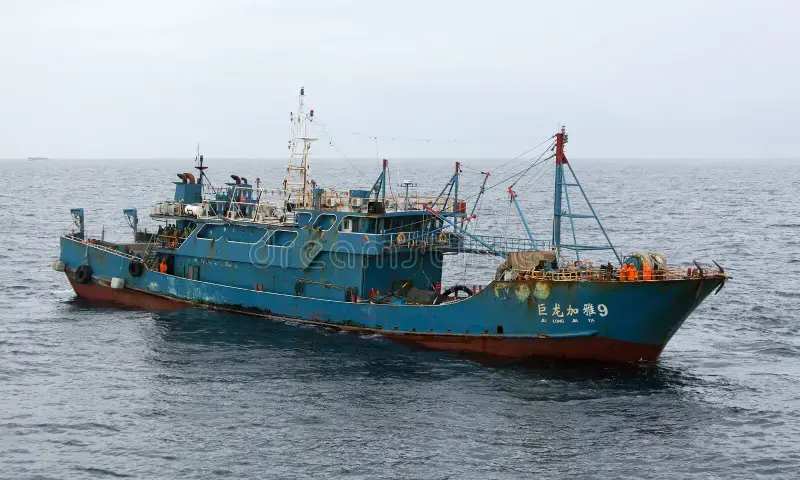
The Japanese, monitoring US Navy radio traffic, were alerted that a carrier raid on their homeland was a possibility after April 14 and prepared accordingly. The Task Force approached within 650 miles of Japan on April 18. Lacking radar, the Japanese “early warning” capability lay in parallel lines of picket boats, which were radio-equipped converted fishing trawlers operating at prescribed intervals offshore. One of these little vessels, No. 23 Nitto Maru discovered the task force on the morning of April 18 and radioed a sighting report. Although Halsey had agreed to take the Task Force within 400 miles of Japan as Doolittle had requested, while en route the admiral recognized the potential threat of Japanese land-based air assets (indeed, 80 medium bombers had been massed in the Kanto area) to halt the Navy’s progress. The exigencies of war dictated that Halsey order the Hornet to launch the 16 Mitchells earlier than planned. And Lieutenant Colonel Jimmy Dolittle personally led the raid.

The Japanese 26th Air Flotilla expected the Americans to approach within 200 miles of Japan as they had done in earlier raids on Wake, Marcus, and in the Marshalls and Gilberts. Japan launched 29 medium bombers equipped with torpedoes from Kisarazu, escorted by 24 carrier fighters equipped with long-range tanks, to find the US Task Force. However, the unexpected deployment of those long-range US Army bombers, took the Japanese by surprise. Taking a little over an hour to launch, Doolittle’s B-25s carrying high-explosive and incendiary bombs, flew on to hit targets in Tokyo, Yokosuka, Yokohama, Kobe, and Nagoya, against negligible opposition. One B-25’s ordnance damaged the aircraft carrier Ryuho (being converted from the submarine depot ship Taigei) at Yokosuka and thus delayed her completion.
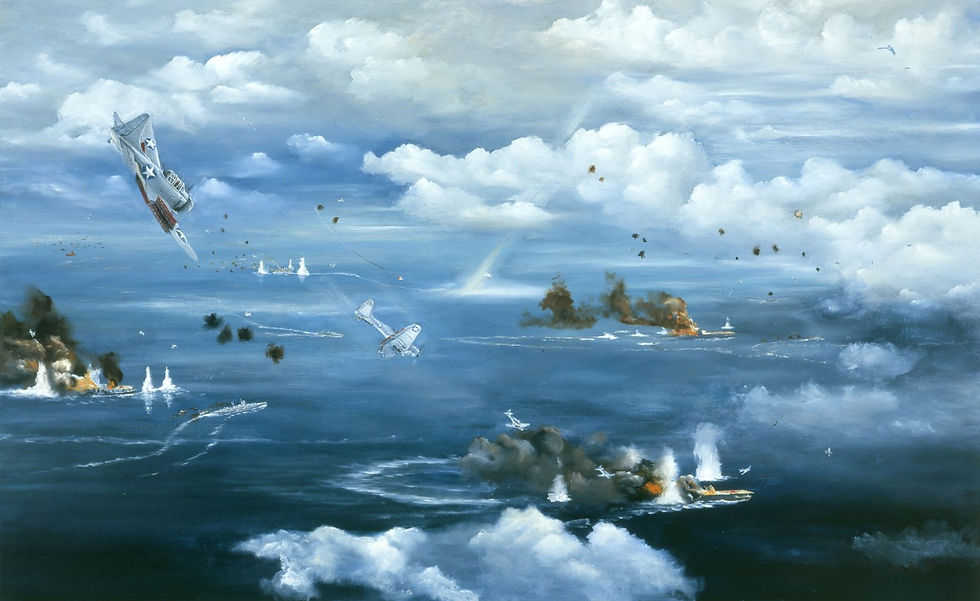
Because of the added distance, no plane was able to make the Chinese airfields. Most of the planes crash landed in China with one plane landing in the Soviet Union. Of the 75 fliers who landed in China, three died in accidents and eight were captured by the Japanese. The rest returned to the United States. The raid inflicted little physical damage to Japan, but it gave a needed lift to morale in the United States. In Japan, the psychological damage of the attack was more important. The Doolittle Raid convinced Admiral Yamamoto, Chief of the Japanese Combined Fleet, that he had to extend Japan's defensive perimeter. He aimed the extension at Midway Island. If Japan held that strategic mid-Pacific atoll, no carrier task force could approach. The Battle of Midway in June 1942, turned out to be a decisive victory for the United States. Many called Midway the turning point of the war in the Pacific.
Jimmy Doolittle was immediately celebrated as a major national war hero after leading the daring raid. It served as a crucial morale booster for the United States following Pearl Harbor, elevating Doolittle to a household name and earning him the Medal of Honor. He was promoted from Lieutenant Colonel to Brigadier General and continued to be a highly regarded commander throughout the war.
Until next time…safe travels.


Comments