
Aircraft That Defined the 20th Century

Updated: Aug 18
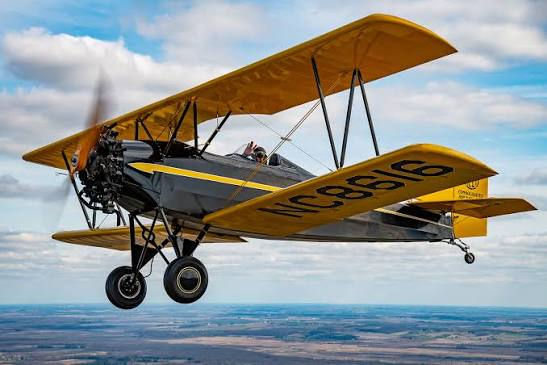
Most people today have access to relatively easy and economical air travel, thanks to modern and efficient airliners. Whether for a relatively short domestic flight or a long haul between continents, modern aircraft have expanded the horizons of air travel. It was only a little over a century ago that international air travel began. The first regular international passenger flight took place on August 25, 1919 on a flight from Hounslow Heath Aerodrome in London to Le Bourget Airport in Paris. That flight utilized a DeHavilland DH.4A operated by Aircraft Transport and Travel. Its modified bomber from the First World War carried the first, single fare-paying passenger to Paris, alongside a cargo of newspapers, Devonshire cream, and jam.

Commercial aviation in the 1920s and 30s transitioned from loud, slow biplanes to reliable all-metal monoplanes that made air travel profitable. Early airliners were unpressurized and drafty, but by the mid-1930s, manufacturers introduced high passenger capacity and comfortable cabins. Many early aircraft, such as the Boeing 247, Martin M-130 (China Clipper), and Boeing 307 Stratoliner, paved the way for short-to-medium-range international travel. However, there were other iconic aircraft which defined aviation and stood out for their innovative designs and timely execution. While all aircraft were distinctly a 20th Century phenomenon, these are the handful which profoundly influenced air travel and contributed to its development.
Douglas CD-3
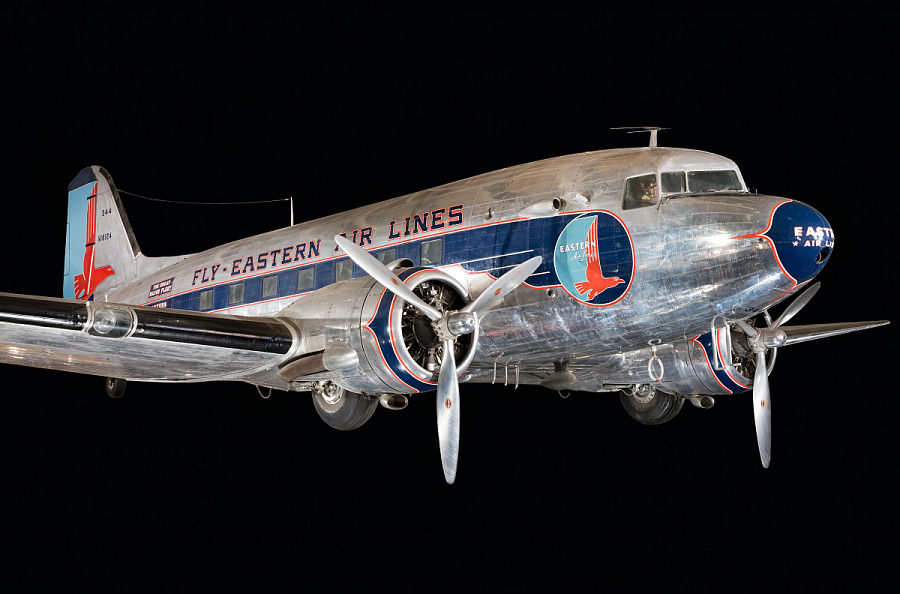
The Douglas DC-3 was a propeller-driven airliner manufactured by the Douglas Aircraft Company. Developed as a larger and improved version of its earlier DC-2, this aircraft featured two radial piston engines producing 1,200 horsepower. Carrying up to 32 passengers, the aircraft offered a range of 1,350 nautical miles and pioneered many new air travel routes. The DC-3 flew the continental US route from New York to Los Angeles in just 18 hours with only three stops. It became one of the first airliners to profitably carry paying passengers without relying on mail subsidies. Combining military and commercial variants, the total production count surpassed a whopping 16,000 aircraft and even though production ended in 1942, more than 100 still fly today, carrying cargo in remote areas and occasionally operating nostalgic charter flights.
de Havilland Comet

The aviation industry boomed after World War II. One of the most significant developments in commercial aviation was the introduction of jet-powered aircraft. The world’s first passenger jet service was launched in May 1952 from London to Johannesburg on a 7,000-mile journey lasting nearly 24 hours, including five refueling and crew change stops. The honors go to the de Havilland Comet flown by the British Overseas Airways Corporation (BOAC). Developed and manufactured by the British aviation company de Havilland, the Comet featured an aerodynamic airframe with four de Havilland Ghost turbojet engines installed in the wing roots. With a capacity of up to 44 passengers, the aircraft had an operational range of 1,300 nautical miles and featured a pressurized cabin and large windows. Within the first year of its airline service though, this aircraft faced major design challenges. Pressurization and depressurization as the plane took off and landed led to cracks due to airframe stress around rivet holes. The aircraft was involved in a series of highly publicized accidents in the 1950s that resulted in the catastrophic mid-air disintegration of several aircraft. de Havilland eventually solved all design issues in the span of a few years, and an improved version, the Comet 4, entered commercial service with BOAC in 1958. In October of that year, their Comet 4 became the first jet aircraft to enter transatlantic service.
Boeing 707

Everything changed, however, with America’s first jet airliner, the Boeing 707. It had a swept-winged design with four revolutionary new engines and was introduced to the market with Pan American World Airways on the first scheduled jet flight across the Atlantic on October 26, 1958. The historic journey was made using a 707-121 named Clipper America. Carrying 111 passengers, the flight departed New York’s Idelwild Airport (now JFK International) and flew to Paris-Le Bourget (LBG), with a brief fuel stop in Gander, Newfoundland. The aircraft was designed for transcontinental and one-stop transatlantic range and was later modified with extra fuel tanks and efficient turbofan engines. With a capacity of up to 194 passengers, the Boeing 707-300 had a range of up to 5,000 nautical miles, enough to fly nonstop across the Atlantic. Though initially fitted with Pratt & Whitney (PW) JT3C turbojet engines, the dominant engine for the Boeing 707 family was the PW JT3D, a turbofan engine with lower fuel consumption and higher thrust. With strong demand across major airlines, Boeing built a total of 855 707s and the aircraft became the basis for the 727 and Boeing’s most prolific narrowbody aircraft, the 737.
Boeing 747

Boeing designed and built the 747 in the 1960s to meet Pan American’s request for a massive passenger jet that was two and a half times larger than existing jets like the 727. The iconic aircraft was the world’s first “jumbo jet.” It revolutionized air travel with its introduction in 1970 by nearly doubling passenger capacity and drastically lowering seat costs. This made long-haul, International travel affordable and accessible for the general public, effectively shrinking the globe. Its legendary status stems from a combination of groundbreaking engineering, a distinctive silhouette and unmatched versatility. The 747 was one of the first aircraft to use high-bypass turbofan engines, technology which delivered double the power while using less fuel. Its dual-aisle configuration vastly improved passenger comfort and allowed airlines to initially introduce spacious lounges upstairs “in the bubble” for premium passengers. Boeing designed the 747 with extensive redundancies, including multiple hydraulic systems and reinforced wings. Beyond commercial flights, modified 747s were famously used by NASA to ferry the Space Shuttle (see my post of January 7, 2023 titled How the Boeing 747 Carried the Space Shuttle) and the aircraft still serves as the current and future official US presidential aircraft known the world over as Air Force One. The manufacturer built over 1,500 747s over its 40-year production history.
The Concorde

The Concorde project was prompted by intense Cold War aeronautical rivalry and the desire of both Britain and France to lead the future of commercial aviation. By pooling their technological expertise and sharing massive development costs, both nations aimed to bypass subsonic American dominance and create a cutting-edge supersonic transport (SST). The project, a collaboration between Sud Aviation (later Aérospatiale) and the British Aircraft Corporation (BAC), led to massive financial investments and the iconic delta-wing design. Its four powerful Rolls-Royce Olympus after-burning turbojet engines generated up to 38,050 pounds of thrust, pushing the aircraft to speeds over Mach 2 (1,522 miles per hour) and an altitude of 60,000 feet, where passengers could actually see the curvature of the Earth. The aircraft also famously featured a droop-nose, which was lowered during takeoff and landing to give pilots visibility over the long, sharp nosecone. Concorde entered commercial service in January of 1976, crossing the Atlantic in less than four hours. But, its airfares were expensive due to very high operating costs. While the manufacturers had predicted a combined market of 350 SSTs, only a handful of orders were received with approximately 100 future options. Only 20 aircraft were ever built, with all 14 commercial variants purchased by the British and French Governments for their national airlines. On July 25, 2000, an Air France Concorde (Flight 4590) struck debris on a runway at Paris-Charles de Gaulle Airport (CDG), rupturing a fuel tank and causing a devastating crash that killed 109 people on board and four on the ground. Although the fleet was temporarily grounded and modified, the incident, combined with the post-9/11 aviation downturn and soaring maintenance costs, rendered the planes economically unviable. Both airlines retired their Concorde fleets in October 2003.
Aircraft development continues unabated. The Boom Overture is a supersonic airliner under development by Boom Technology. The aircraft is designed to cruise at a maximum speed of Mach 1.7 or 1,304 miles per hour. It’s expected to reach supersonic speeds without causing a sonic boom at ground level by taking advantage of a physics phenomenon known as mach cutoff. It might just be one of the future aircraft that help to define aviation in the 21st Century.
Until next time…safe travels.


Just looked up the Boom Overture aircraft and strategy - fingers crossed that they get everything to work 🤞