
Flight Attendants and Turbulence


Turbulence is something most passengers dread. Flight attendants, however, are well-rehearsed in necessary safety procedures, often dealing with turbulence on a daily basis. Sometimes turbulence can be predicted and other times it occurs without warning. Safety is always their first priority and there are strict procedures which flight attendants follow to keep everyone aboard the aircraft safe. When turbulence hits, flight attendants are ready to act as quickly as possible to secure the cabin and avoid injuries by initiating a sequence of events that most passengers don’t really notice. Initially during the pre-flight briefing, safety and service issues are discussed. The cockpit crew will advise flight attendants on the weather en route and if any turbulence is expected. Airline operations departments also keep the flight crew updated on conditions in flight and help them navigate around known areas of turbulence. The cockpit crew take additional cues from weather charts, radar returns and PIREPS, which are pilot reports from other aircraft preceding them on their assigned route.
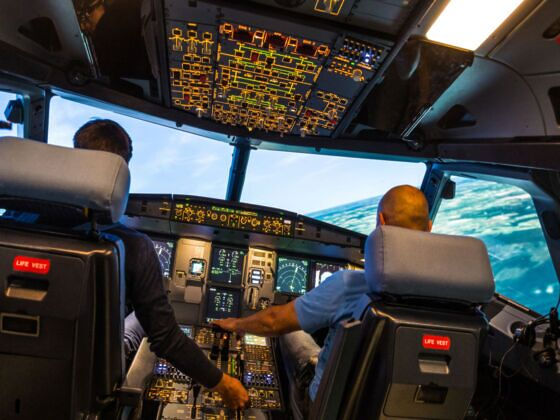
Aircraft are specifically designed to withstand turbulence and pilots and flight attendants fly through it frequently. Turbulence often happens when the aircraft is climbing or descending when the cabin is fully secure. Seatbelts have already been fastened by both passengers and crew and the sign remains illuminated. If turbulence occurs at other times during the flight, pilots will turn on the seatbelt sign and later, if time permits, call the crew to inform them if it's safe to continue service in the cabin. As soon as the seatbelt sign comes on, however, the crew immediately begins securing the cabin. They will check to ensure all passengers are in their seats with their seatbelts fastened and that all loose items are stowed in designated areas. If they’ve been instructed by pilots to take their seats, they will do so once this check is reported to the senior crew and before strapping in to their jump seats. Flight attendants must then wait until the seatbelt sign is turned off or the pilots call to say it’s safe for them to move about the cabin. Although the seatbelt sign may be left on to keep passengers secure, the crew may then be released to return to service.

Major US airlines are required by law to follow strict cabin safety standards set and enforced by the Federal Aviation Administration (FAA). If turbulence occurs during the main service with carts in use in the cabin, depending on the severity, crew may be advised to take their seats. In this case, all carts are first returned to the galley and all loose items are stowed, hot liquids are poured away, and all carts are locked into place. Lavatories are also locked at this point while other crew members secure the cabin. The aim is to secure the aircraft before taking their jumpseats. Communication and teamwork are crucial on board an aircraft during both normal and abnormal operations. Flight attendants are the pilots eyes and ears in the cabin. If turbulence occurs unexpectedly, they need not wait for the seat belt sign to be illuminated, but take immediate action. If the seatbelt sign is turned on, but no announcement is made from the flight deck, the senior crew member or the flight attendant responsible for making announcements will instruct passengers to remain seated with seatbelts fastened due to turbulence.

In case of severe turbulence, the priority is for cabin crew to secure themselves. If turbulence is sudden and severe, anything not secured may be considered hazardous and passengers may be subject to injury. Southwest Airlines now requires flight attendants to discontinue cabin service at 18,000 feet (instead of 10,000) and prepare for landing.This ensures that passengers and crew are seated with seatbelts fastened. Since instituting this change, the carrier claims it has cut turbulence-related injuries by 20%. Delta Air Lines recently discontinued service on short, Economy and Comfort+ flights under 350 miles to ensure cabins are secure before encountering any potential turbulence. Korean Air also changed its service standards to end 40 minutes before landing, so all items are stowed. The airline also stopped serving hot noodles in Economy Class class to avoid injuries during turbulence. There's a sobering reason this is drilled so hard into flight attendants, as they are the ones most likely to get hurt. While protecting passenger safety, they are the ones most likely to risk getting hurt. Each year, over 100 people are injured in turbulence, with over half of them being flight attendants, with the most common injuries being those to the neck, head, shoulder, and ankle.

Around two billion passengers fly every year, according to data from the US National Transportation Safety Board (NTSB) and the FAA, which shows that between 2009 and 2023 in the United States alone, there were 206 serious injuries and one fatality caused by turbulence. Of those injured, 40 were passengers, and 166 were crew members. According to the International Civil Aviation Organization (ICAO), of the severe injuries caused to passengers flying throughout 2023, almost 40% were caused by turbulence. Airbus reported that between 2014 and 2018, there were 240 cases of severe turbulence. Of these, injuries were reported to both passengers and crew: 30% were on long-haul flights and 12% on short-haul flights.

In reports covering in-flight turbulence and how it’s becoming more frequent and severe, the British Broadcasting Corporation (BBC), estimated there are approximately 5,000 incidents of severe-or-greater turbulence every year worldwide, out of more than 35 million global flights. They cited safety reporting data from the ICAO indicating that a significant portion of severe in-flight injuries are tied to these turbulent events. To put things in perspective, the above-cited numbers mean that severe turbulence impacts only 0.014% of all global flights, making it a statistically rare event. However, severe turbulence is meteorologically defined as atmospheric disturbances that exert more than 1.5g force of up-and-down movement on the body. This forces the aircraft to lurch violently enough to lift passengers out of their seats if their seatbelts aren’t fastened. In one of the worst incidents on record, a Singapore Airlines B777-300ER from London diverted to Bangkok in May of 2024 after encountering what was described as extreme turbulence. One passenger died and 71 others were injured.

While those details are indeed harrowing, that type of turbulence is very rare. Passengers shouldn’t be overly concerned. Modern commercial airplanes are engineered to withstand extreme structural stress far beyond any forces encountered in flight. Airplane wings are rigorously tested and certified to flex 90 degrees or more without breaking and no modern commercial aircraft has ever broken apart or crashed due to turbulence. It’s often completely unpredictable and unnerving, but take comfort knowing that flight attendants will take whatever measures are needed for everyone to stay safe. Passengers can help themselves by making sure their seatbelts are firmly secured during flight.
Until next time…safe travels.

Comments