
The History of Paris Charles de Gaulle Airport

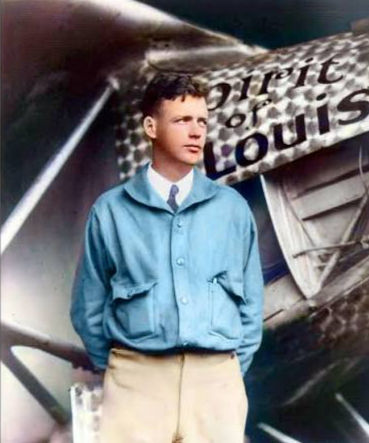
Paris Charles de Gaulle Airport (CDG) is one of the busiest airports in the world, but it has a much shorter history than other major European airports such as London Heathrow (LHR), Amsterdam Schiphol (AMS) or Frankfurt (FRA). It opened in 1974 as the newest airport to handle the capital city’s exponential aviation growth and has expanded significantly since that time. Paris' first main airport was Le Bourget (LBG), which opened in 1919. A legendary airport, it was one of the first to carry passengers and gained global fame after Charles Lindbergh's historic transatlantic flight in 1927. Five. years later, Orly Airport (ORY) opened and, after military use by the German Army during the Second World War, it grew to become the city's main airport. During the 1950s and 60s, however, traffic at both airports rose significantly, but their expansion was limited by their relatively close-in, urban locations. In 1952, Air France moved all operations to the less-constrained Orly, but pressure was growing and it was clear that a new airport would eventually be needed.

The search for a new airport location began in 1957. An area near the town of Roissy was selected, to the lesser developed northeast side of the city. This was mostly agricultural land at the time, so few buildings needed to be demolished in order to build the airport. Originally designated as Paris-Nord Airport, construction began in 1964. The name soon changed to match the nearby town of Roissy. After its opening in 1974, the name changed yet again to honor Charles de Gaulle, the recently deceased former president and principal leader of the Free French Resistance during World War II. Construction was planned on a large scale. The limitations of the previous airports were well known and the site chosen for the new one was over 12.5 square miles. This was quite large for a European airport. By comparison, London Heathrow occupies only about 4.7 square miles. The two main runways were originally over 11,800 feet long, large taxiways were built, and plenty of space was left for additional terminal construction. This proved to be advantageous decades later when the Airbus A380 was introduced. It proved to be much easier to integrate this gargantuan aircraft at Charles de Gaulle than at other airports.
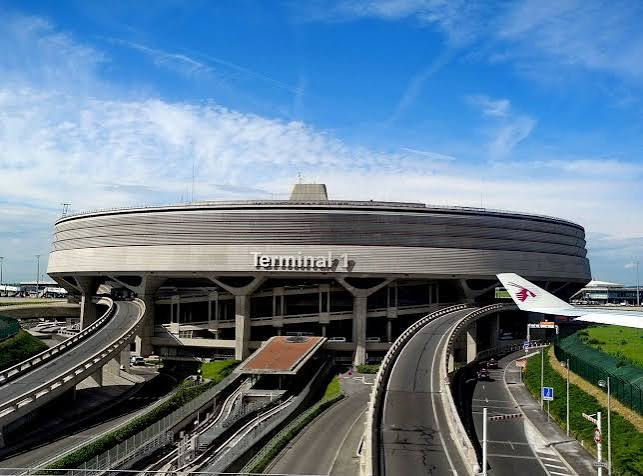
Charles de Gaulle Airport opened in 1974. It then offered only one runway and one main terminal (now called Terminal 1). The terminal was a revolutionary, avant-garde design at the time and highly functional. The circular octopus design opened onto seven satellites or 'docks' surrounding it. This was planned to maximize use while also minimizing transit times from car to aircraft. Airport functions were 'stacked' with separate levels for parking, arrivals, departures, and office administration. These were connected via a series of ramps and escalators. The airport's original plans featured five similar terminal buildings, all built in the central area. These would connect to one main central building, with accommodation and other facilities. Terminals would be linked by light rail, which would extend to the city. This multiple circular terminal plan was eventually dropped, though, even before Terminal 1 was operational.

Use of the airport grew quickly. It handled 2.5 million passengers in its first year, and that number rose to 7.5 million in 1976, by which time a second runway was operational. Originally, plans called for a dedicated Aerotrain city link and prototypes were even built for this high-speed hovertrain. The largest of these used a Pratt & Whitney JT8D turbofan engine, the same found in the Boeing 727 and early 737models. Although it set a world speed record, the hovertrain concept was scrapped in 1974 and the RER commuter train line to the city was substituted and opened in 1976.

The airport made history when the Concorde arrived in 1976. Together with London Heathrow, Paris Charles de Gaulle became one of the first airports to operate commercial Concorde flights. On January 21st, 1976, commercial supersonic passenger travel officially began when British Airways and Air France launched two simultaneous inaugural Concorde flights. One aircraft departed from Heathrow heading to Bahrain in the Persian Gulf. Another Concorde took off from Paris Charles de Gaulle Airport heading to Rio de Janeiro in Brazil, with a scheduled refueling stop in Dakar, Senegal. Both aircraft cruised at Mach 2, twice the speed of sound. A few months later in May of 1976, the airlines again flew simultaneous trips, this time to the United States. Both supersonic jets left their European hubs together and arrived at the Washington Dulles International Airport (IAD) at the exact same time. These flights marked the dawn of regular commercial supersonic transport, cutting long-haul travel times in half. The Air France Concorde called the Paris airport home until the service was discontinued in 2003.

Paris Charles de Gaulle experienced highly rapid and steady growth in its early years, forcing Aéroports de Paris to plan its expansion. Terminal 2 opened in 1981 and was designed more like a traditional linear terminal. It has since expanded into a series of separate transit hubs. Terminal 2D opened in 1989, and the international-dedicated terminal 2C, which featured a new computerized baggage system, in 1993. And, Terminal 2E debuted in 2003 as a dedicated space for Air France and other Sky Team Alliance partner airlines. The airport completed construction of Terminal 3 in 1990 and it’s primarily dedicated to low-cost and charter airlines.The separate terminal buildings are all connected via walkway as well as the inter-terminal CDGVAL Train. All this growth demanded additional runways. The airport’s third runway opened in 1999. The opening of the fourth runway in 2000 was a major milestone, making CDG the first airport in Europe to operate two independent pairs of parallel runways.
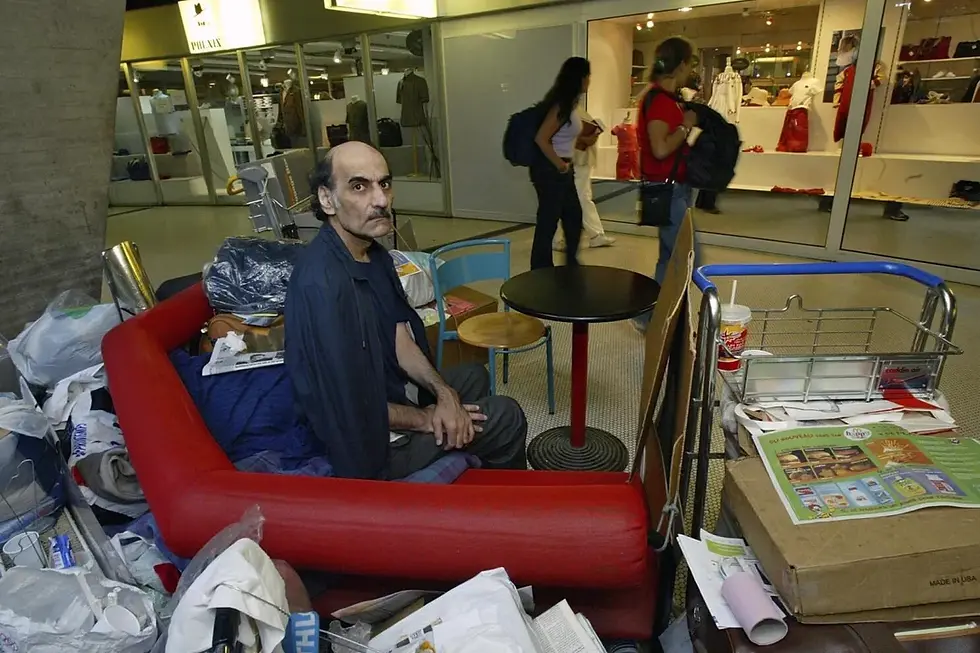
Every airport has tales to tell, but none so intriguing as the story of Mehran Karimi Masseri, an Iranian refugee who spent 18 years living in Terminal 1 after becoming trapped in bureaucratic and legal limbo. His saga began in 1988. After being expelled from Iran and losing his vital identification and refugee documents, he couldn’t legally enter France or board a plane to any other destination. He ended up setting up a home in the international transit lounge, where he slept on benches, kept a diary and lived on food from airport staff. His extraordinary experience inspired Steven Spielberg’s 20004 film The Terminal. Though he was eventually granted residency in Belgium in 1995 and in France in 1999, Nasseri chose to remain in the airport until he was hospitalized for health issues in 2006. He later lived in a Paris shelter, for a number of years, but returned to Charles de Gaulle in 2022, where he later died of a heart attack that same year.
Everyday travelers also have stories to tell and their are tens of millions of them. The airport handles approximately 2,000 daily flights and served more than 72 million passengers in 2025. It ranks as Europe's busiest airport by overall passenger traffic and leading cargo activity. Skytrax, the UK-based consultancy that runs an airline and airport review website, ranks it as the 6th best airport in the world and the best in Europe. Quite a feat for any airport.
Until next time...safe travels.


Comments