
Deregulation Changed Everything

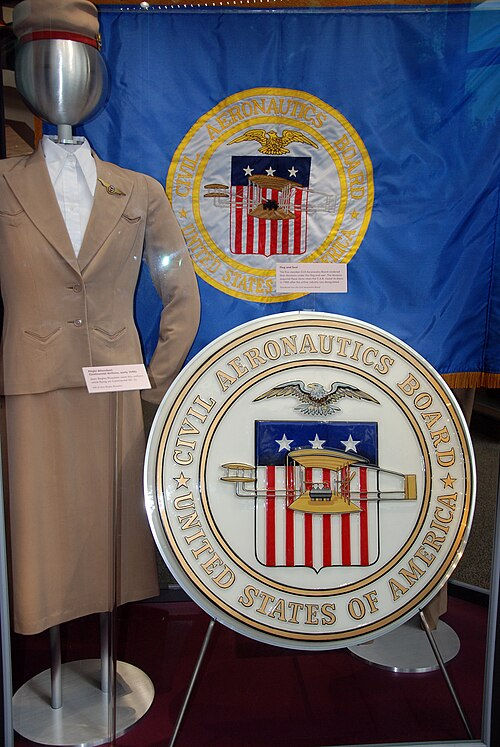
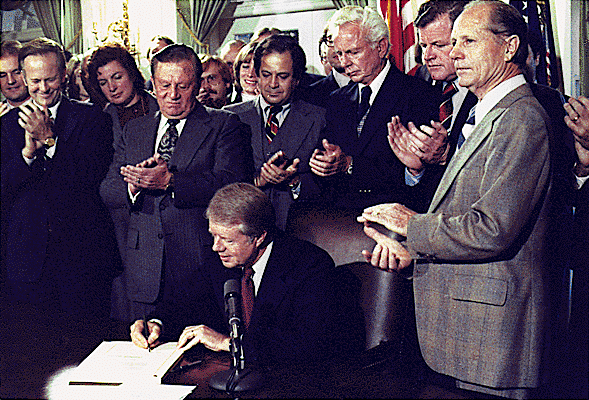
Prior to 1978, air travel in the United States was tightly managed by the Civil Aeronautics Board (CAB). Established in 1940, the CAB was an independent agency of the US Federal Government and controlled which airlines could fly specific routes. It also dictated ticket pricing and effectively prevented new competitors from entering the market. This regulatory system was intended to ensure stable operations and safe service, but it also resulted in artificially high ticket prices and stifled innovation. The 1973 oil crisis and the resulting economic stagnation of the mid 70s pushed the heavily regulated system to its breaking point. Legacy airlines relied on fixed federal prices, while consumers and economists began demanding the economic liberalization of air travel to promote competition and lower costs. Passed on October 24, 1978, the Airline Deregulation Act fundamentally transformed commercial aviation in the United States. Spearheaded by economist Alfred E. Kahn and signed into law by then-President Jimmy Carter, the Act removed federal control over fares, routes, and market entry, transferring economic power from the government to the free market.
The Deregulation Act’s passage transformed the commercial airline industry and the passenger experience. Regulation by the Federal Government had enabled airlines to prosper in their infancy, but it also kept fares high and prevented airlines from operating as efficiently as possible. Many thought the CAB had outlived its usefulness. To start, Congressional investigators compared fares of regulated airlines flying between states with fares of unregulated airlines flying solely within certain states. They found that unregulated airlines charged far lower fares. Sweeping change was needed, which resulted in the Act’s passage. How did the airlines react? Most airlines strongly opposed deregulation and encouraged their employees to lobby against its adoption. Their fears of a destabilized industry would prove to be prescient and well founded.

The 1978 legislation instituted several sweeping changes to the commercial aviation sector. Airlines were granted the right to fly where they wanted, allowing them to drop unprofitable routes and add new, high-demand paths without CAB approval. Carriers were also given the freedom to set their own ticket prices based on market demand. The regulatory powers of the CAB were gradually phased out, with the agency’s official sunset occurring in 1984. While economic controls were abandoned, the Act did not diminish the regulatory authority of the Federal Aviation Administration (FAA) over aviation safety.

The effects of deregulation were many, immediate and profound, triggering both massive growth and eventual consolidation within the industry. Established airlines initially rushed to gain or preserve access to the most lucrative routes. New airlines quickly formed, resulting in fierce competition which drove fares downward And passengers flocked to airports in record numbers. Deregulation spurred the creation of dozens of new airlines like People Express, Presidential and New York Air while prompting expansion for many smaller, regional airlines such as Air Florida, Frontier, and Ozark. Larger airlines like Eastern, Braniff, Delta, Continental, Western and Northwest also extended their networks to compete with the largest carriers.

Deregulation also lifted restrictions on where airlines could fly. To increase their efficiency, airlines adopted the hub-and-spoke system using a few major airports as central connecting points. This strategy maximized aircraft use, increased passenger loads, and kept more aircraft flying. But, it also increased airport and air traffic congestion and eliminated many convenient nonstop flights. And once a single airline dominated a hub, the lack of competition often led to higher fares. The hub and spoke model provided the traveling public with significantly cheaper airfares, wider destination choices and more frequent flight schedules. However, it also resulted in more connecting flights (increasing travel time), longer layovers and severe bottlenecks during bad weather and other disruptions.

When recession hit in the early 1980s and the Professional Air Traffic Controllers Organization (PATCO) went on strike in 1981, the industry began to suffer losses. Many airlines had over-expanded and found themselves desperately fighting for a share of a decreasing market. Large, well-managed, well-financed airlines, such as American, United, and Delta, weathered the storm during the 1980s. But Braniff, Eastern, and many others could not and were forced into bankruptcy and extinction. Struggling to survive, airlines cut wages and benefits, but this strategy resulted in strikes and lower productivity. Operations were streamlined and thousands of employees laid off. Some feared these efforts would compromise safety, especially if necessary maintenance was deferred to save money, but these fears proved groundless.

Unfortunately, the Airline Deregulation Act was the catalyst for the demise of Pan American World Airways, one of the nation’s most storied carriers. It stripped the airline of its protected international monopolies, flooded the market with new competition and allowed domestic carriers to expand globally, leaving Pan Am stranded without the connecting domestic networks needed to feed its massive fleet. In a desperate attempt to build a domestic network, Pan Am overpaid to acquire National Airlines in 1980. The resulting integration was a financial and logistical disaster that burdened the airline with massive debt. To stay afloat as losses mounted, Pan Am was forced to sell off its most profitable assets. In 1981, the Metropolitan Life Insurance Company (MetLife) bought the famous Pan Am Building in New York City.

Four years later, the airline sold its InterContinental Hotel chain and eventually all their lucrative Pacific routes to United Airlines, along with the carrier’s prized access to London’s Heathrow Airport. The 1988 bombing of Pan Am Flight 103 over Lockerbie, Scotland, was a devastating blow. It resulted in severe reputational damage, massive security lawsuits, and plummeting passenger confidence. The 1990–1991 Gulf War caused jet fuel prices to skyrocket, making it impossible to sustain their inefficient fleet of massive Boeing 747 jets. Delta Air Lines purchased the majority of Pan American World Airways' transatlantic network in November of 1991. In a deal valued at nearly $1.4 billion, Delta acquired their European routes, the Frankfurt hub, operations at New York’s Kennedy Airport and the airline's Northeast Shuttle. Pan Am ceased operations just over a month later after Delta withdrew its financial support for a proposed reorganization.
Decades of intense industry competition and multiple bankruptcies ultimately led to heavy consolidation. Today, American, Delta, Southwest and United collectively control approximately 80% of the US domestic passenger airline market.
Until next time…safe travels.



Comments