
The Boeing Supersonic Transport


In the early 1960s, Boeing began the development of a supersonic passenger aircraft named the Boeing 2707. The company aimed to offer an American version of the supersonic airliner that would transport between 250 and 300 passengers at speeds approaching Mach 3 with a range of 4,000 miles. No less than four General Electric GE4 turbojet engines were selected to power the supersonic jet. Their proposed design superseded the specifications of the ongoing supersonic transport (SST) projects at the time. Boeing aimed to introduce a variable-sweep wing (swing-wing) design to allow in-flight alteration of the wing geometry. Since swept wings are not fuel-efficient at subsonic speeds, the swing-wing design would enable pilots to select an optimum sweep angle in-flight depending on the aircraft's speed.

Back in the mid-50s, around the same time as the development of the Concorde, Boeing began working on multiple SST designs. These first focused on a supersonic jetliner with traditional fixed delta wings. However, the idea of a swing-wing to increase the overall efficiency of the aircraft started to float and take hold by the end of the decade. In 1962 a partnership between France and the UK was announced to build a supersonic commercial aircraft, one that was likely to challenge America's global dominance of the aviation industry. The Concorde was set in motion. Soon afterwards, the US Federal Aviation Administration (FAA) was tasked by then-President John F. Kennedy to prepare long-term, national aviation goals. The FAA created Project Horizon, a commission that promoted supersonic transport. and announced that Federal funding would go to any company that could build a plane able to surpass the European program in both capacity and speed. Boeing won the design competition with their swing-wing supersonic design proposal capable of carrying more passengers and making faster trips.

While the proposed supersonic speeds would incur high fuel costs, greater utilization of the aircraft would aid in offsetting the cost of fuel. Members of the President's task force and the FAA were skeptical of the SST, mainly due to the increasing fuel cost and more significant carbon emissions due to supersonic shockwaves. The International Air Transport Association (IATA) had recognized these challenges and released various design imperatives for an SST. Boeing proposed a widebody design that could carry 277 passengers in a two-class configuration with 30 passengers in First Class and 247 in Economy Class. To comply with some of the design imperatives by IATA, Boeing added canards behind the nose of the aircraft. Canards are small, horizontal wing-like surfaces mounted on the forward fuselage of the aircraft, ahead of the main wings. They manage pitch, stability and lift.
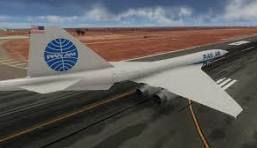
After 18 months of development challenges, Boeing abandoned the, variable-sweep "swing-wing" design for its SST in October of 1968. The design change was made due to insurmountable weight problems with the swing-wing mechanism, which threatened to make the aircraft incapable of carrying a practical payload. The added weight of the canards and heavy wing mechanism had a direct impact on the operational range. Following its abandonment, the company transitioned to a fixed, "tail-less" delta wing configuration, designated as the Model 2707-300. The redesigned 2707-300 was smaller than the previous 2707-200, and the passenger capacity was reduced from nearly 300 to 234. A few months into production, Boeing had reserved 122 orders and delivery positions with 26 airlines. They anticipated flight testing of the supersonic jet in late 1972, followed by certifications and entry into service by 1975.

That never happened. Over the years, the project had begun losing public support. In 1964, a planned six-month test for sonic booms in Oklahoma City had to be cut short after 15,000 residents listed noise complaints, and nearly 150 windows shattered in two of the city's tallest buildings. Other environmental concerns entered the fray, too, with fears of the plane's impact on the ozone layer. Ultimately, the rising scrutiny from the public would be the final nail in the venture’s coffin. Despite significant support from the Nixon Administration, the SST project was officially cancelled following a 51-46 Senate vote to end funding due to soaring costs, environmental concerns and questionable economic viability. The cancellation of the SST was devastating. Seven thousand Boeing workers were laid off immediately, and an additional 60,000 employees were dismissed over the following two years. The company faced a massive financial setback. While the US Government contributed over $840 million to the program, Boeing had invested approximately $125 million of its own funds. Their direct financial loss was a significant blow at the time. They were only left with two incomplete prototypes which they were forced to scrap. All that remained of the project was the full-sized 90-foot mockup. It had quite the post-cancellation history.

The mockup was sold at a 1972 auction to a Nebraska investor for only $31,119. Early the following year, it was disassembled and moved via seven rail cars to Kissimmee, Florida, near Disney World where an SST Air Museum opened in July of 1973. Unfortunately, the museum failed to draw sufficient visitors and closed in 1981 when the ill-fated mockup became a roadside attraction, sitting for years in the blistering Florida sun and salty air. Salvation came for the mockup in May of 1998 when it was sold to the Hiller Aviation Museum in San Carlos, California, where it was later upgraded with a full-fidelity cockpit donated by Boeing with models simulating advanced, in-depth electronics, hydraulics, avionics and navigation. After a comparatively peaceful 15 years in California, the museum struck a deal with the Museum of Flight in Washington state. In April of 2013, the plane was traded, loaded onto a truck and transported back home for the first time in over 40 years.

Now at the Museum of Flight Restoration Center at Everett, Washington’s Paine Field, the mockup has shared a home with the complex that could have served as its production line. Little work has been done on it since it returned home. Here, the relic has sat gathering dust for the past 13 years. The SST mockup has certainly seen better days, but over the past 50 years, it's undoubtedly seen far worse. What was ultimately dubbed the "Boeing Bust" brought about devastating shockwaves that rippled throughout the Seattle and Washington economies, causing unemployment to skyrocket all over the Evergreen State. Had it not been for the success of the 747 “Jumbo Jet,” the SST could have been the project that buried Boeing.
Although the 2707 mockup would certainly serve as a one-of-a-kind exhibition piece, it’s not on public display. Doing so would only be a stark reminder of a high-profile missed opportunity, not just for Washington state and Boeing, but for American aviation in general.
Until next time...safe travels.


Very interesting ... Who knew???